



Second Amendment Incorporated Against the States
What a feast for law geeks. Today, the Supreme Court actually decided an incorporation case. Most of us never thought we would see such in our life times. What is incorporation? It is the judicially created doctrine that certain provisions of the the bill of rights are applicable to the states. History teaches that the bill of rights only applied to the national government because the people wanted extra security that the new government would not transgress fundamental rights such as free speech. However, the Court has held that certain provisions of the bill of rights apply to the states via the due process clause of the 14th Amendment. This is a bit of hocus pocus to give the Court greater control over state legislation.
At issue in McDonald v. Chicago was whether the Second Amendment precludes a Chicago gun-control law that practically prohibits the ownership of handguns. (Note that the landmark decision in Heller, only applied to the national government). In examining whether to incorporate the Second Amendment, the Court had to decide whether the right to bear arms is fundamental to our scheme of ordered liberty and whether the right is deeply rooted in the nation’s history and traditions.
The majority answered yes to both questions, noting that self-defense is a basic right and the central component of the Second Amendment. The Court also noted that the centrality of this right dates back into English history and Blackstone.
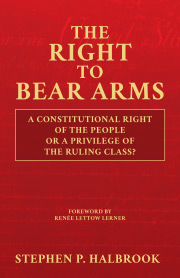
(Props to Independent Institute Research Fellow Stephen Halbrook for being cited by the majority multiple times for his work on the history of gun rights!)
Though I hate selective incorporation because it gives the Court the ability to roam about the Constitution and pick what provisions it will apply to the States, this is a good decision for individual liberty. Government fails to protect us from the criminal element (especially in the Windy City) and would prefer that we have no defense against it. This decision helps the people on both fronts.